THE MERGING OF ART AND THEATRE: WILLIAM KENTRIGE’S EVOLUTION AS A GRAPHIC ARTIST AND POSTER MAKER
Written by Chloé Truscott
Catalogue Raisonné, Volume I and Volume II, compiled by art researcher Warren Siebrits, the result of an intense archeological exercise, and covering William Kentridge’s monumental evolution from an unknown artist to an international multidisciplinary powerhouse.
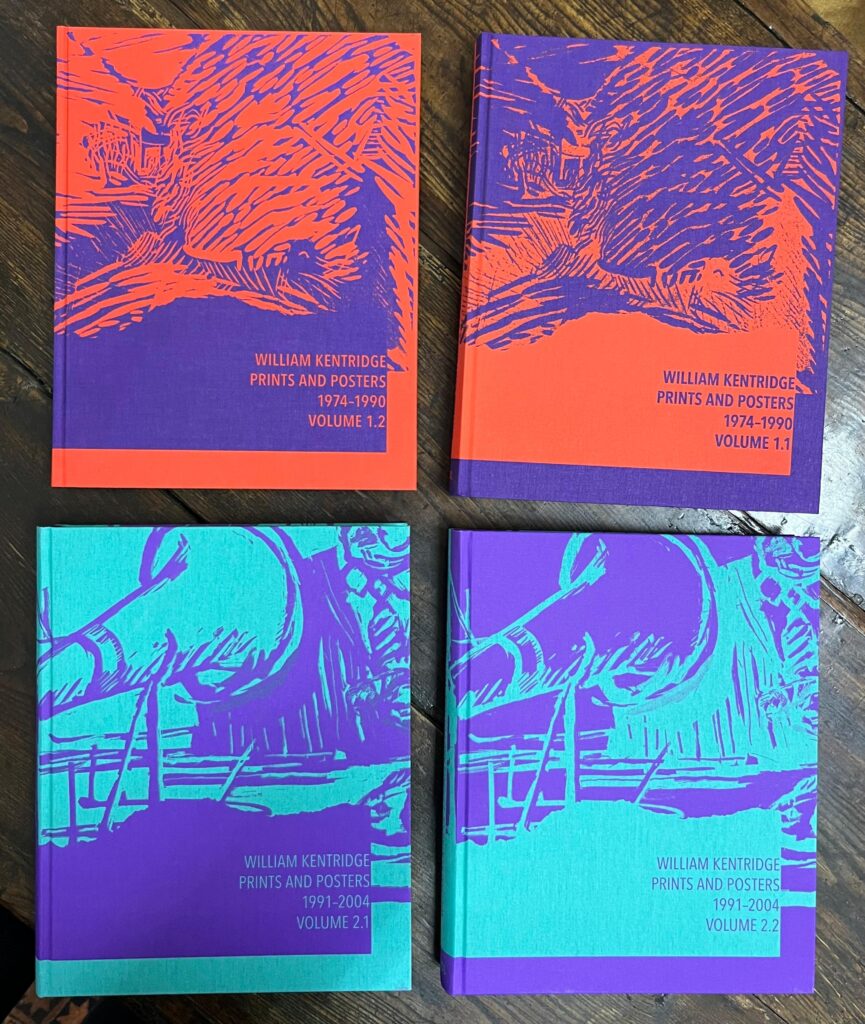
Volume I 1974—1990, is an impressive meticulously detailed compellation that maps out the foundational graphic works and poster designs of William Kentridge, unveiling his formative years, while studying African politics at the University of Witwatersrand (WITS). It tells the story of a young artist unsure of the validity of his work, and the challenge of finding a happy medium between his passion for art and theatre. Highlighting the independent approach in mastering basic printmaking during the Apartheid years.
Volume II, 1991—2004, This period covers the pivotal transitional years, sees Kentridge grow from a relatively unknown young South African artist to an internationally acclaimed artist, film maker and theatre director, who by 2004 had exhibited his work on six continents. This period also sees a decisive shift in focus in Kentridge’s studio practice. The beginning of collaborations in Kentridge’s practice, where before his printmaking was largely self-published, there came the forging of long-lasting interactive relationships with print making professionals, many of which endure to this day.
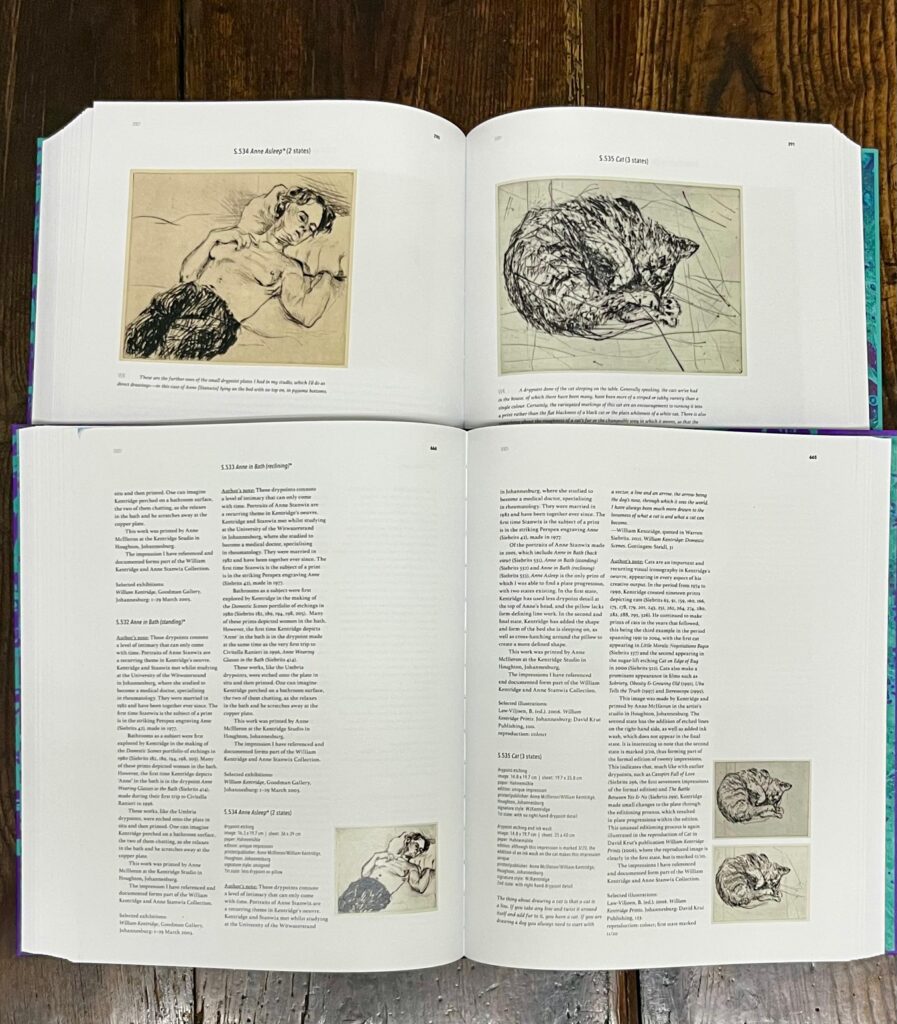
Together, both installments prove that print making is not a side project for Kentridge, but the physical and conceptual engine driving his animations, theatre designs and film projects.
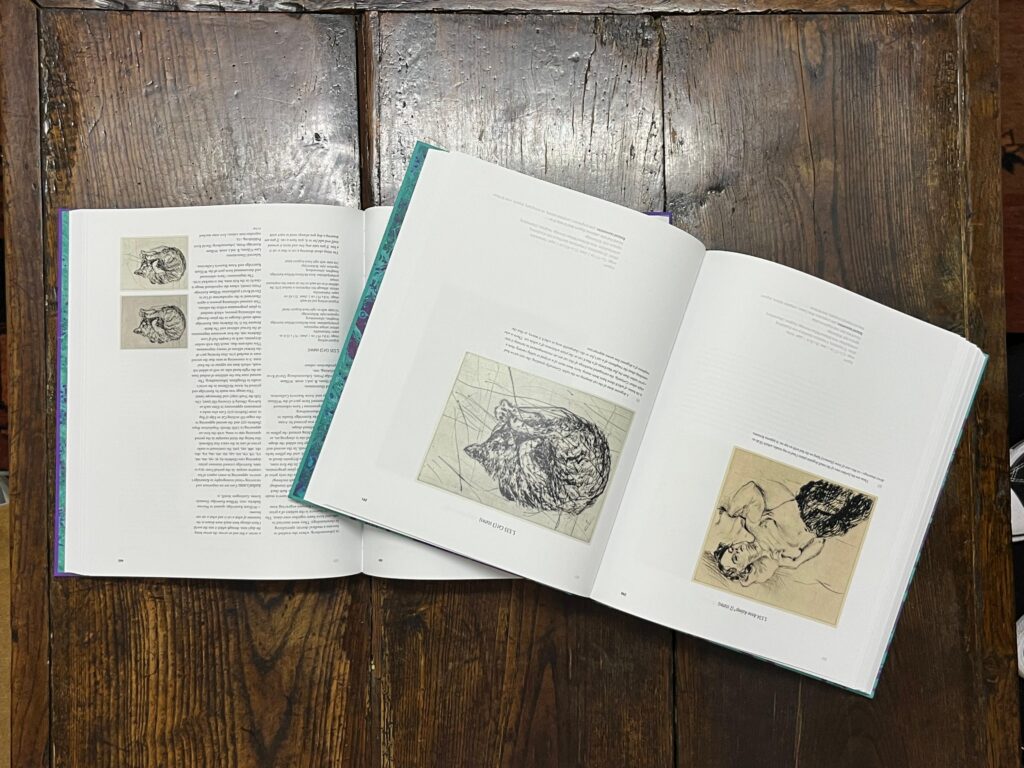
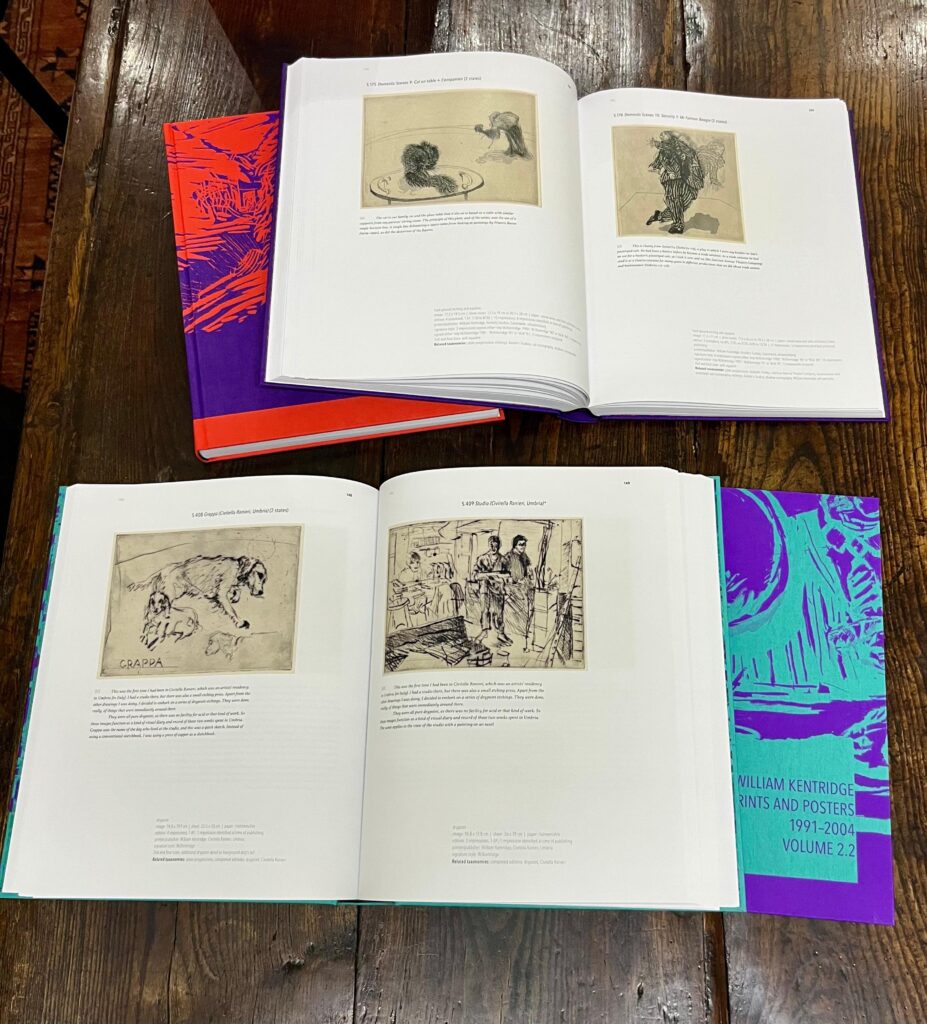
The two volumes are each split into two books. With the ability to have both books open at the same time, it creates the ease to read together—dipping in and navigating the imagery, history, artist notes and technical details in this fascinating chronology, as suits the reader’s purpose and interest.
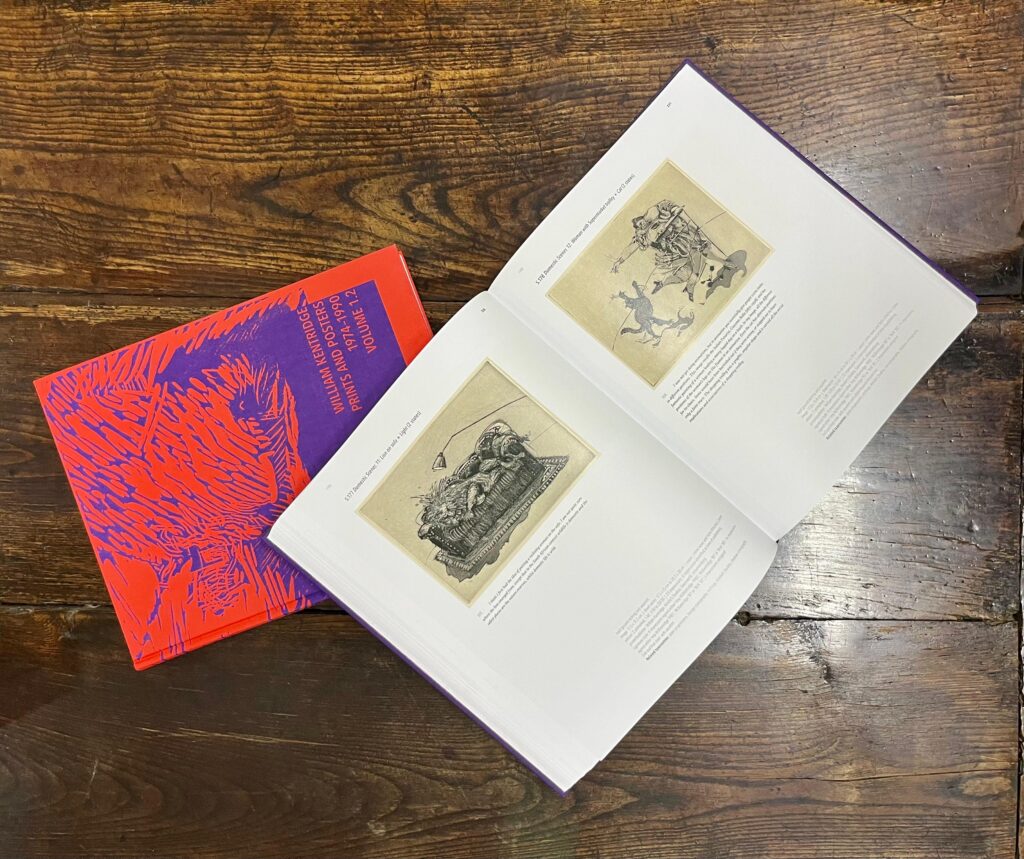
The duty of a Catalogue Raisonné is to provide a documentation; they are not books about interpretation, but rather stating the facts as they are, relative to the work and the circumstances in which they were made.
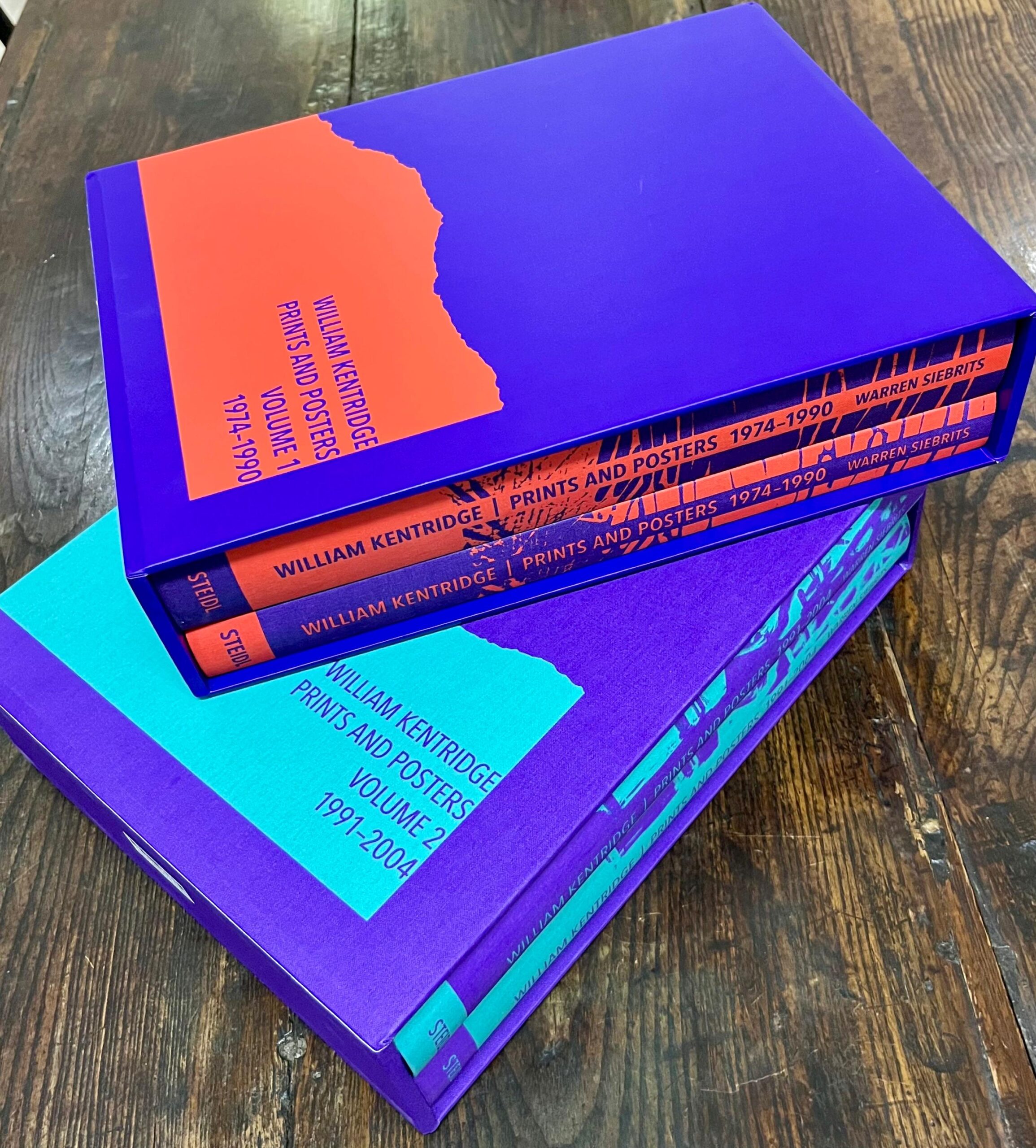
They are an encyclopedia and an index, and at the same time beautiful objects. They are housed in a protective slip, and the vibrant bold colours make a testament to what they are; a monument.
“[…] I think most artists look at the world around them for inspiration and perhaps ask “Why?” Kentridge looks at the world around him and asks “Why not?” – Bill Gregory