
UKWENZA ISIKHALA KU-PEBOFATSO MOKOENA KA-DIAMOND DUST APOSTROPHES/PEBOFATSO MOKOENA DIAMOND DUST APOSTROPHES
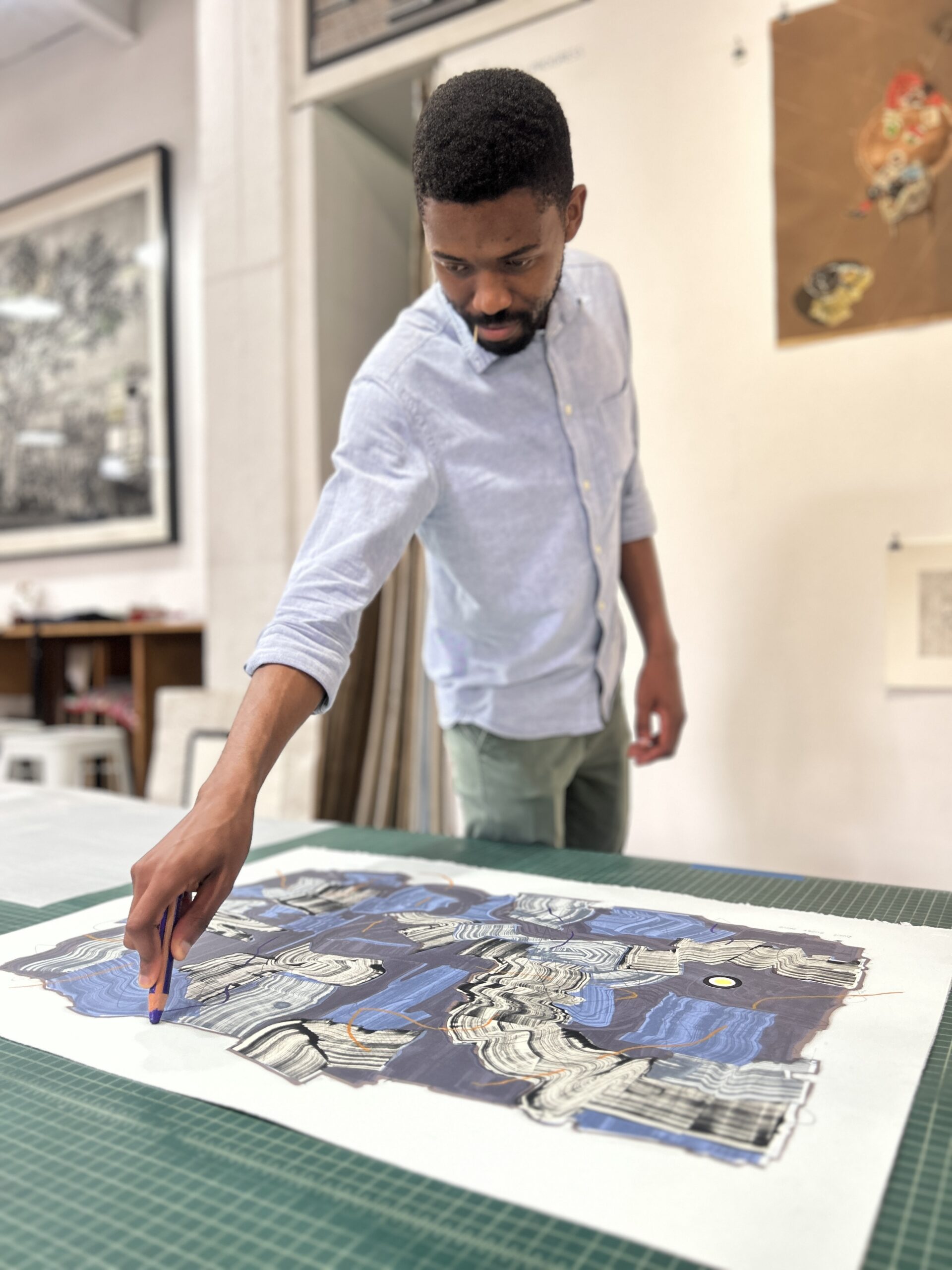
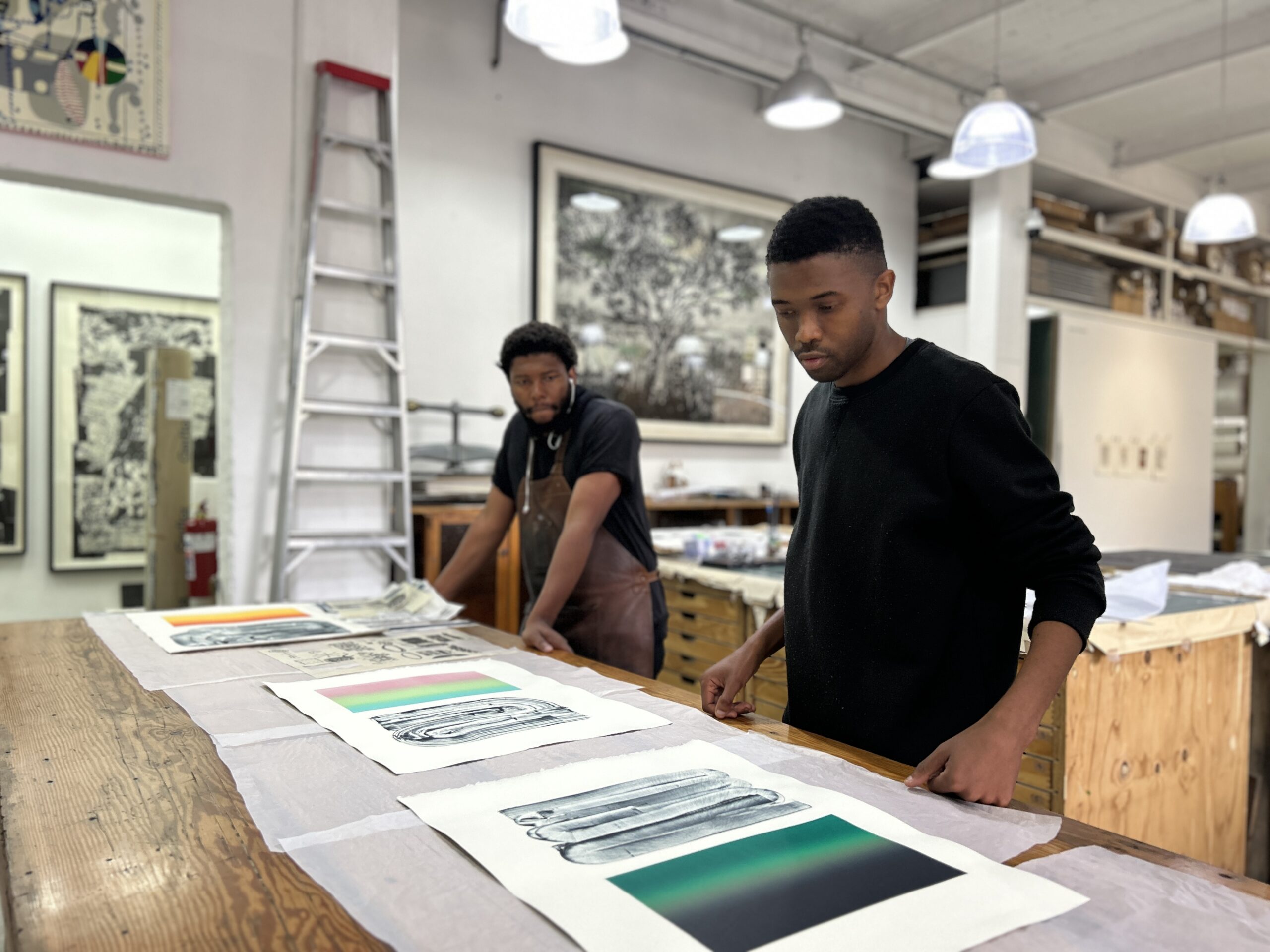
Ngesikhathi ehlala edolobheni elikude ledayimane lase-Oranjemund, eNamibia, u-Pebofatso Mokoena wazithola esendaweni ebonakala iqonde phambili, kodwa yaziveza ukuthi inzima ngokwemvelo yayo: ulwandle olubheke entshonalanga, ugwadule olusempumalanga kanye nesimo sezulu esaguquguquka ngendlela eyanele ukuthi ithumele noma yimuphi umqondo ekujikeni. Yilo muzwa wendawo obanzi futhi osondelene oqondise imisebenzi eyalandela. Kunokuba kuboniswe indawo ngokuqondile, uchungechunge olusha lwemisebenzi eyingqayizivele kaMokoena ephepheni luhumusha ulwazi lwesikhala lube isimo sokubukwa. Izithombe, eziqondiswa ngokuphelele umbala, uphawu, umugqa kanye nokungezwani kwesakhiwo ziqala ukuvusa ‘isikhala’ kunokuchaza.
Le misebenzi iveza umbono wokuthi iphepha elingenalutho libamba indawo yalo. Amapherimitha wekhasi acishe abe indawo yokumbiwa, indawo okufanele isetshenzwe futhi idluliswe. Ohambweni lwazo olusuka emcabangweni luye ekubunjweni kwalo, izithombe zembiwa, zicutshungulwe futhi zipholishwe ngezingqimba ezihlukahlukene zezindlela, amamaki nemibala. Lo mqondo wokumbiwa awukona uwodwa; imisebenzi eminingi izwakala njengezindawo zokumba ezibukwayo, ezimakwe ngemicibisholo, amaphoyinti, imidwebo, amanothi enkundla, ama-sonic pulses kanye nemigqa yekhonta. Lezi zimpawu ezibonakalayo azidali indawo exoxwayo kodwa kunalokho ziphakamisa ukuthi iciko ngokwalo lidweba imephu njengoba lihamba.
Imisebenzi ka-Mokoena imelana nokuhlotshaniswa kwendabuko kwe-monotype njengendlela esetshenziswa kakhulu ngokuthinta komzimba okupendiwe. Esikhundleni salokho, bancika kakhulu ekudwebeni, ikholaji nezinye izinqubo zokwenza ukuphrinta njenge-pronto lithography kanye ne-etching. okuhlanganisa izichasiselo, izimpawu, namamaki aphilayo ngaphakathi
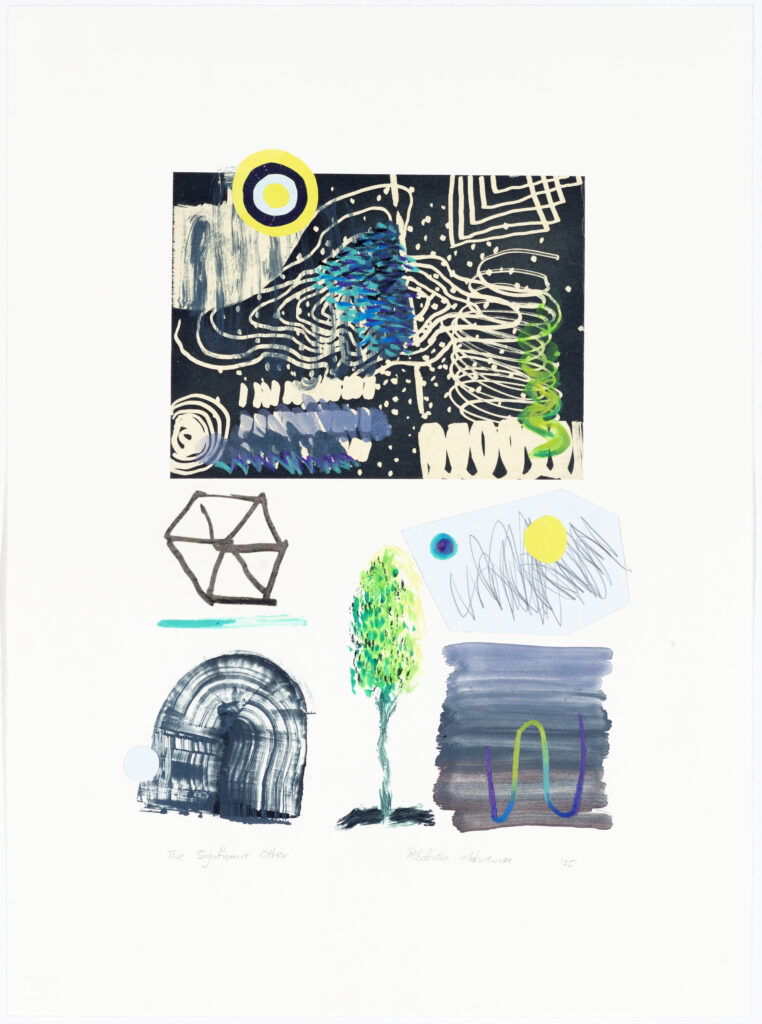
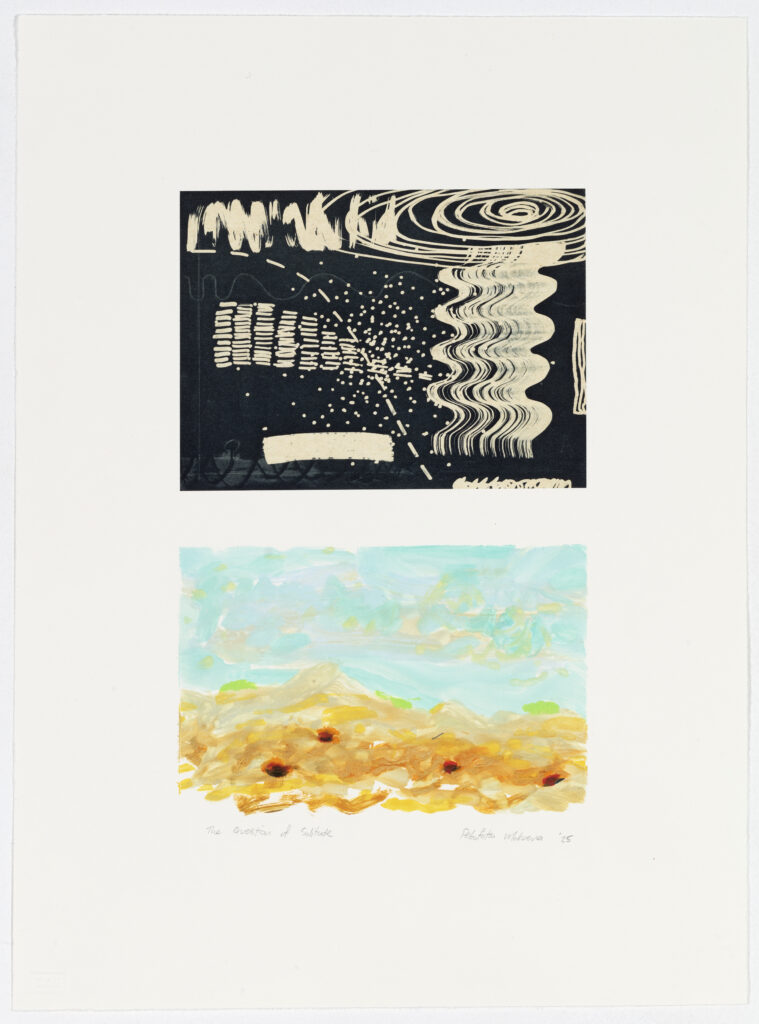
kuMokoena, inqubo yokucabanga nokusebenza akusona isithombe sokugcina isenzo samabomu: siphakamisa ukuthi kuhlukaniswe nomsebenzi wobuciko ngokwawo. Inqubo yisithombe. Kukhona ikhwalithi yomculo lapha, futhi. Ngesikhathi ese-Oranjemund, uMokoena ukhumbula indlela yena nezakhamuzi akanye nabo ababechitha ngayo amahora abo estudiyo belalela inqwaba yabaculi, abanye babo ongabathola bephawulwe emaphethelweni emisebenzi yakhe. Isigqi salokhu sihamba emsebenzini ngendlela yamamaki afana namagagasi nemigqa ehlehlayo efana nomsindo, isikhala nokunyakaza.
Ngokuhlanganisayo, imisebenzi ihlola umehluko phakathi kokuminyana nokuvuleka, abanye bephethe oyinki abajulile abaluhlaza futhi eduze nokwendlaleka okweqile kuyilapho abanye basebenzisa isikhala esingesihle ukuze bakhe umuzwa wobukhulu, okuvumela indawo yokuphefumula. Banikeza umbukeli hhayi isigameko, kodwa inzwa, umuzwa ozwakalayo womoya, isigqi, ukuminyana, ukwanda. UMokoena usibuza ukuthi sizizwa kanjani futhi sizibandakanya kanjani nesikhala; kungemehlo ethu, imizimba yethu, imizwa yethu kanye nezinkumbulo zethu?
Imisebenzi akuwona amamephu ezindawo, kodwa into engaphatheki kakhulu: imidwebo yesipiliyoni, eboniswa nge-matrix yamamaki. Ngokwenza kanjalo, basicela ukuba sicabange ngendawo yesithathu; hhayi umhlabathi ongaphansi kwezinyawo zethu noma isibhakabhaka phezulu, kodwa indawo lapho ukuthinta komzimba kudala okuthile okuzwakala kuyinto evamile, noma ngabe imelana nencazelo
Kubhalwe ngu Daniela cook (Translated by Brilliant Khambule)
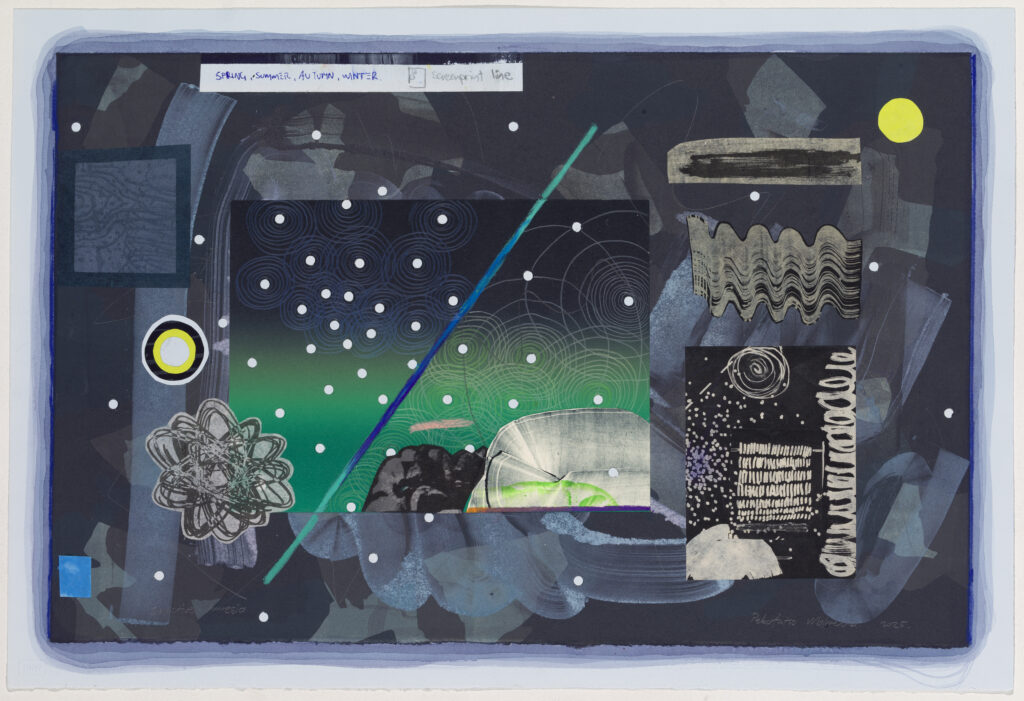
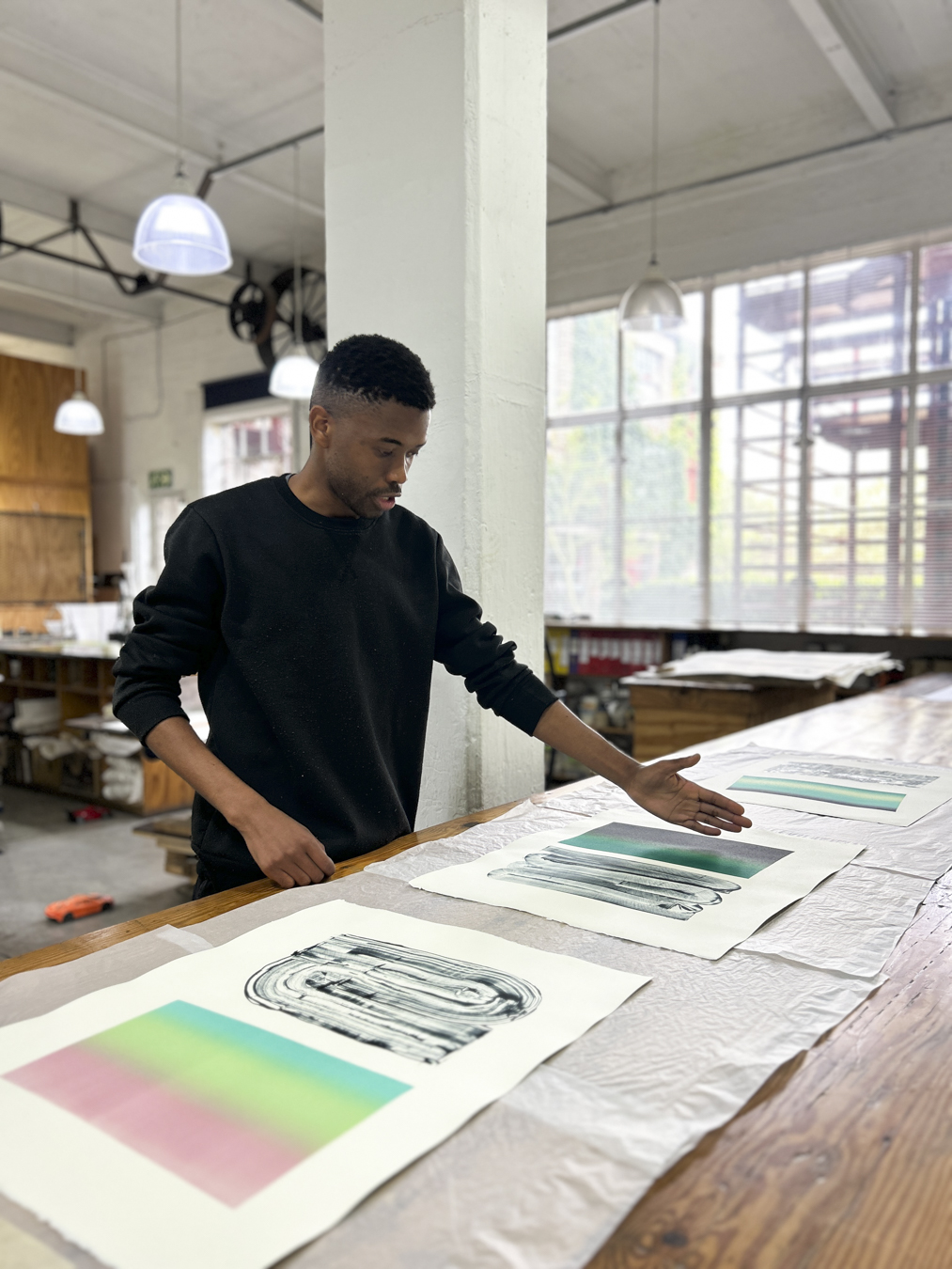
During a residency in the remote diamond town of Oranjemund, Namibia, Pebofatso Mokoena found himself in a landscape that is seemingly straight forward, but revealed itself to be elusive in its nature: ocean to the west, desert to the east and weather that shifted violently enough to send any mind into a spin. It’s this dynamic sense of place that is both vast and intimate that directed the works that followed. Rather than depict the landscape directly, Mokoena’s new series of unique works on paper translate the experience of space into visual form. The images, strictly guided by colour, mark, line and compositional tension begin to evoke ‘space’ rather than describe
These works present the idea that a blank piece of paper holds its own spatiality. The perimeters of the page become somewhat of an excavation site, a terrain to be worked and moved through. In their journey from thought to composition, the images are mined, processed and polished through various layers of mediums, marks and colours. This sense of excavation isn’t metaphorical alone; many of the works feel like visual dig sites, marked by arrows, pinpoints, diagrams, field notes, sonic pulses and contour lines. These visual cues don’t create a narrative destination but rather suggest that the artist himself is mapping as he goes.
Mokoena’s works resist the traditional association of the monotype as a medium with primarily painterly gestures. Instead, they lean heavily into drawing, collage and other printmaking processes like pronto lithography and etching. Including annotations, symbols, and organic marks within the final image is a deliberate gesture; it suggests that for Mokoena, the process of thinking and working is not separate from the artwork itself. The process is the image.
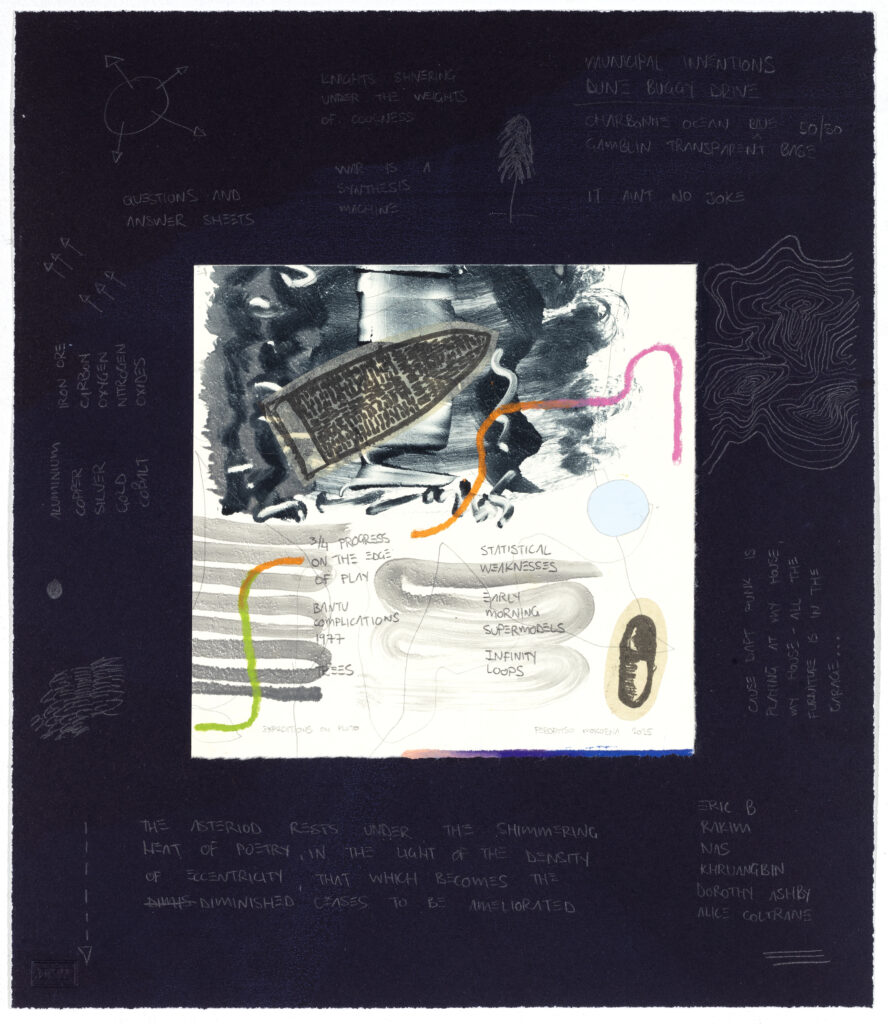
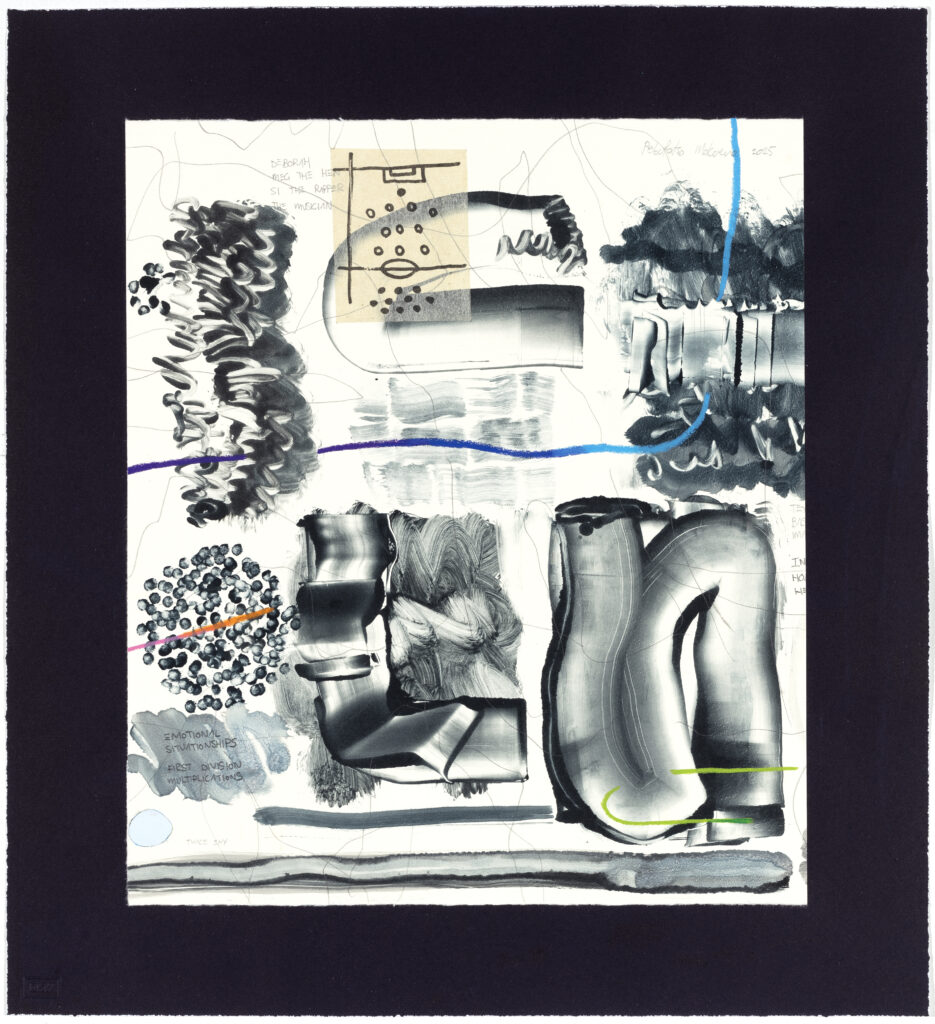
There’s a musical quality here, too. While in Oranjemund, Mokoena recalls how he and his fellow residents spent their hours in the studio listening to a wide range of artists, some of which you can find noted in the margins of his works. The rhythm of this moves through the work in the form of wave-like marks and reverberating lines that resemble both sound, space and motion.
Compositionally, the works explore contrasts between density and openness, with some holding deep blue inks and near excessive layering while others use negative space to create a sense of vastness, allowing for room to breathe. They give the viewer not a scene, but a sensation, a felt sense of air, rhythm, density, expansion. Mokoena is asking us how we experience and engage with space; is it through our eyes, our bodies, our feelings and our memories?
The works are not maps of geographical locations, but something far more intangible: diagrams of experience, visualised through a matrix of marks. In doing so, they ask us to imagine a third space; not the ground beneath our feet nor the sky above, but a space where gestures create something that feels familiar, even as it resists definition.
Written by Danijela Cook