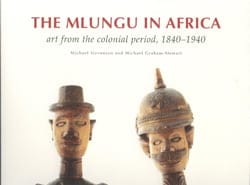
The Mlungu in Africa: Art from the Colonial Period, 1840-1940
R400This work examines African art that engages with the presence of white people in the ‘contact zones’ and colonial states in sub-Saharan Africa.

Showing 305–320 of 335 results
 Out of stock
This work examines African art that engages with the presence of white people in the ‘contact zones’ and colonial states in sub-Saharan Africa.

Conceived in parallel to Grayson Perry’s exhibition The Most Popular Art Exhibition Ever!, this catalogue brings together visual material and texts that expand on the themes raised in the show.
.

The Pre-Raphaelite Brotherhood had a dynamic influence upon the Victorian era. The painters, including Dante Gabriel Rossetti, William Holman Hunt and John Everett Millais, fought against an increasing mechanized society to establish the artist as a creative individual, attempting to raise art from the triviality into which it had fallen.
 Out of stock
The Prints of Wilhelmina Barns-Graham – A Complete Catalogue is the first book to provide a full account of the printmaking career of British artist Wilhelmina Barns-Graham, with particular reference to the technical innovations she pioneered while working in association with master-printers.
Wilhelmina Barns-Graham experimented with a variety of printmaking techniques, finally discovering her ideal means of expressions in screenprinting. Through partnerships with innovative printmakers, the artist experimented with new techniques and materials that allowed her to create prints which, in their intensity of colour and precision of design, have the quality almost of paintings.
Based on new research, and drawing on information contained in her numerous diaries, The Prints of Wilhelmina Barns-Graham incorporates a complete illustrated catalogue of all her known work in etching, linocut, lithography, screenprinting and monotype, from 1946 to 2007. It considers her work in relation to that of other British artists, especially those connected with the St Ives school, and examines her prints in relation to her work in other media, in particular, her paintings. This book will prove an invaluable resource for museum curators, students of British art and twentieth-century abstraction, and all those seeking to learn more about this aspect of the career of one of Britain’s most important artists of the late twentieth-century.

rt that was “headbuttingly impossible to ignore” is how Charles Saatchi describes the work that intrigued him as he started to collect British art in the early 1990s. Damien Hirst’s giant shark in formaldehyde, Tracey Emin’s unmade bed and a chilling

Touring through England’s great outdoor museum of public sculpture, this unique and beautifully-photographed film features works by, among many others, Jacob Epstein, Eric Gill, Henry Moore, Barbara Hepworth, Richard Deacon, Anish Kapoor and Rachel Whiteread.
 Out of stock
John Richardson brings the same dazzling narrative style to this memoir as he did to Volumes I and II of A Life of Picasso. Robert Hughes called the second volume “a masterpiece in the making, the most illuminating biography yet written on a twentieth-century visual artist and the only one that can sustain comparison with Painter on Proust, Ellman on Joyce, or Edel on Henry James”; he also praised Richardson’s “crispness of writing” and “impressive eye for the offbeat or scandalous detail.” All these qualities conspire to make The Sorcerer’s Apprentice a brilliant and fascinating chronicle.

Taken over the past three decades throughout Europe and North America, these photographs are of age-old landscapes; historical treasures of architecture nestled in the countryside and rusting industrial sites reclaimed by nature.
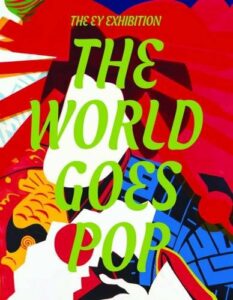
The World Goes Pop explores the contemporaneous engagements with a spirit of pop throughout the globe, concentrating not only on the relatively well-covered activity in the US, UK and France but also on developments throughout Central and Eastern Europe, Latin America, Asia, Africa and the Middle East.
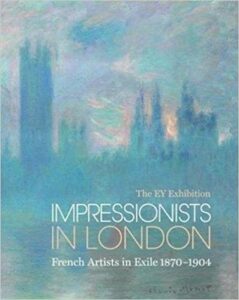
The EY Exhibition: Impressionists in London: French Artists in Exile charts the story of the French artists who took refuge in London during and after the devastating Franco-Prussian War and the Paris Commune. Following these traumatic events there was a creative flourishing in London as the exiles responded to British culture and social life regattas, processions, parks, and of course the Thames.
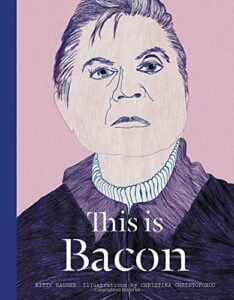
Francis Bacon was one of the giants dominating the artistic landscape of the mid-twentieth century, and served as the inspiration and launching point for much of the figural and abstract art that came after him.

Modern art begins with Goya. He was the first to create works of art for their own sake, and he lived in a time of incredible cultural and social dynamism when the old concepts of social hierarchy were being shaken by the new concept of equality for all.

This book accompanied an exhibition that opened at the National Arts Festival in 2004. It considers work by a range of women artists who have represented themselves and their bodies in their work. The book is accompanied by an education supplement written by Philippa Hobbs. The educational supplement has been designed as a guide for…

Tiepolo is a brilliant example of the specifically pictorial intelligence. This book is both a study of his art and an argument for fuller recognition of the peculiarities of the painters’ representational medium. Svetlana Alpers and Michael Baxandall locate distinctive modes of Tiepolo’s representation of the world and human action; follow his process of invention from first pen drawings through small oil-sketches to great frescoes; and analyze his best and biggest painting, the Four Continents, in the Stairway Hall of the Prince-Bishop’s Residence at Wurzburg, which is illustrated with photographs specially taken for the book.

TM: The Untold Stories Behind 29 Classic Logos is a new book by Mark Sinclair which gives an insight into how 29 major logos were developed.

This collection of hard-hitting and highly readable essays reflects Gombrich’s preoccupation with the central questions of value and tradition in our culture. He confronts – with characteristic incision and erudition – some of the most urgent issues that challenge today’s students of art and civilization.
No products in the basket.