The Cape Whale Coast: Gateway to the Overberg Region of South Africa
R200Describes guesthouses and hotels, vineyards and vintners, restaurants and recipes; artists of the Overberg region of Western Cape Province; and its marine life.
Showing 81–93 of 93 results

Describes guesthouses and hotels, vineyards and vintners, restaurants and recipes; artists of the Overberg region of Western Cape Province; and its marine life.

Michael Cope was born in Cape Town, South Africa, in 1952. He has published three novels (one with Ken Barris), two volumes of poetry and a memoir.

Take two adventurous wine-lovers, a few thousand kilometres through ten South African wine regions and enough newly-discovered vinous gems to fill a transport truck, and the Good Value Guru has what he would call “a pleasant sort of journey”.

King Justice Mpondombini Sigcau’s Struggle to Save the Kingdom of the Mpondo from Unjust Developments.

This is a history that, quite simply, had to be written. Those who actively participated in the struggle for liberation are growing ever older; here they have related their experiences to trained historians, sociologists and political scientists, many of whom were themselves involved in the resistance movement. SADET has compiled and coordinated this remarkable book that weaves together the complex history of The Road to Democracy in South Africa.
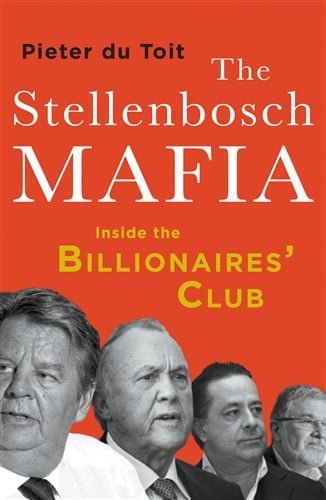
About 50km outside of Cape Town lies the beautiful town of Stellenbosch, nestled against vineyards and blue mountains that stretch to the sky. Here reside some of South Africa’s wealthiest individuals: all male, all Afrikaans – and all stinking rich. Johann Rupert, Jannie Mouton, Markus Jooste and Christo Weise, to name a few.
 Out of stock
Traces and Tracks: A Thirty Year Journey with the San documents the history and life of the San in Namibia, Botswana and South Africa. It depicts Paul Weinberg’s intimate perspective on the lives of modern-day San over the past 30 years.

Published in 2014 by the Goodman Gallery on the occasion of the exhibition Unrest by Hasan and Husain Essop and the Standard Bank Young Artist Award for Visual Art 2014
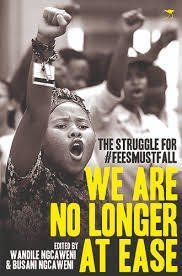
The collection includes works by the young student leaders turned academic and public commentators such as David Maimela, Thapelo Tselapedi and Sisonke Msimang; student newspaper journalists that were covering the protests like Natasha Ndlebe; public writing commentators with aims to inform and teach the broader South African society about the aspects of the movement like Yamkela Spengane and Rofhiwa Maneta; lecturers who were assisting the students articulate and find clarity in the way they shaped and voiced their ideas such as Sabelo Ndlovu-Gatsheni and then of course others were foot soldiers on the ground leading students through the police brutality of rubber bullets and pepper spray like Mcebo Dlamini, Loverlyn Nwandeyi, Ntokozo Qwabe and Ramabina Mahapa.
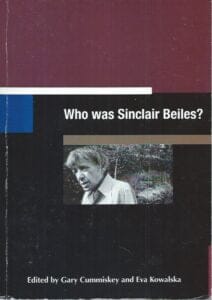
Beiles is probably most famous for helping Burroughs get Naked Lunchpublished at Olympia through Girodias, at a time when Burroughs was really strung out on paregoric and/or heroin. His most famous work in print is probably as one of the four contributors (Beiles, Burroughs, Corso & Gysin) of the now legendary cut-up compilation, Minutes to Go, published in 1960.
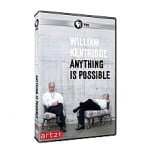 Out of stock
William Kentridge: Anything Is Possible gives viewers an intimate look into the mind and creative process of William Kentdridge, the South African artist whose acclaimed charcoal drawings, animations, video installations, shadow plays, mechanical puppets, tapestries, sculptures, live performance pieces, and operas have made him one of the most dynamic and exciting contemporary artists working today.
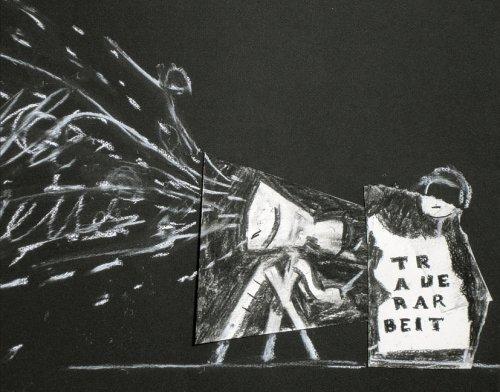
In the course of designing his recent production of Mozart’s “The Magic Flute, ” artist and animated filmmaker William Kentridge created a mechanized theater maquette. When he saw the miniature stage’s potential as sculpture, projection site, and installation, he began to imagine “Black Box, ” the freestanding structure whose development and installation are documented here. A movement-filled, visually charged piece, it is peopled with two-dimensional mechanical figures, completed with scenic elements and lit by flickering video. A digital projector displays animated films created from Kentridge’s charcoal drawings and sculptures. Kentridge considers his title term in three senses: a “black box” theater, a “chambre noire” as it relates to photography, and a “black box” flight data recorder, as used in airline disasters. The clandestine fourth reference may be to his ongoing exploration of German history and its convergence with South African history through Namibia, a former German colony that came under South African control prior to gaining its independence. “Black Box” evokes all that, and the joyful mechanics of pre-cinematic visual spectacles, magic lanterns, the camera obscura and the zoetrope. A unique and richly layered meditation on the act of seeing, on vision and experience, and on the nature of knowledge itself.

Wim Botha won the Standard Bank Young Artist award for Visual Art 2005. This wonderfully produced catalogue documents the eight years of work leading up to that achievement.
No products in the basket.